Ulrich Simmons · 8 October 2026
Linen Weaves and Their Unexpected Role in Managing Condensation Cycles for Holiday Decor Stored in Ceiling Compartments
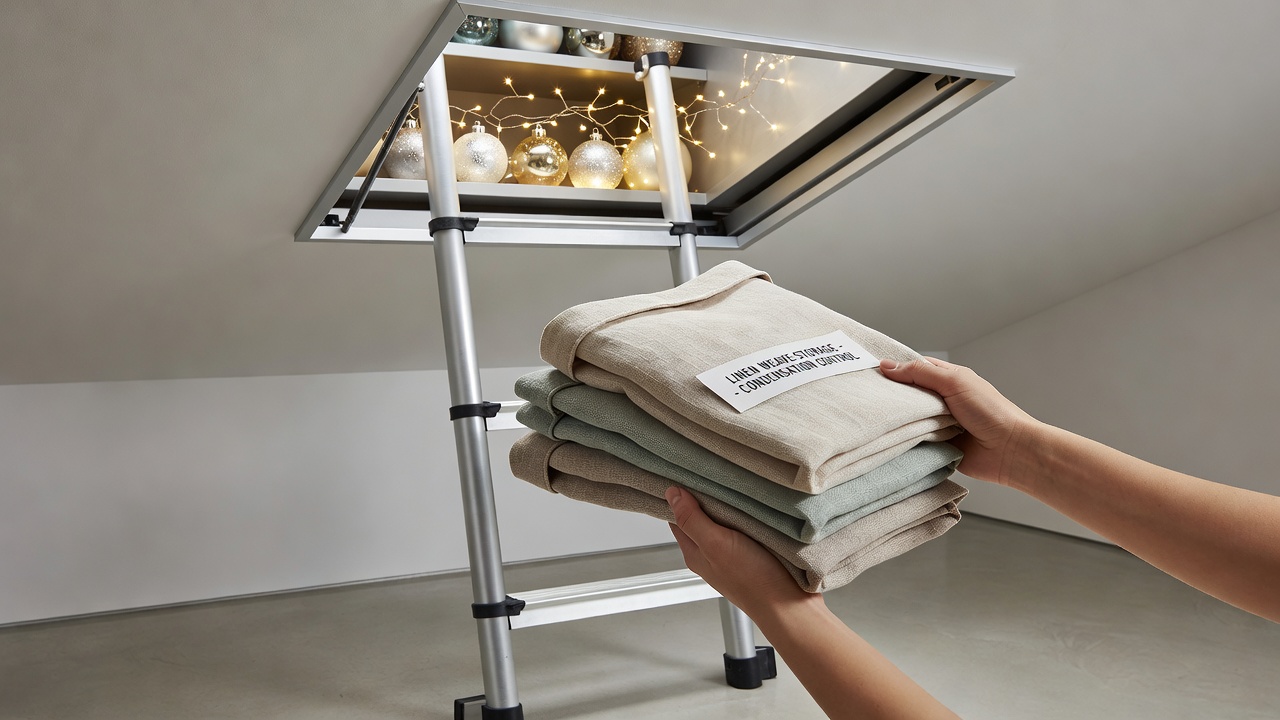
Ceiling compartments in residential buildings often experience fluctuating temperatures that trigger condensation cycles, particularly when holiday decor gets packed away for months at a time, and linen weaves have emerged in studies as materials that interact with those moisture patterns in measurable ways. Researchers have documented how the natural fiber structure of linen, derived from flax plants, allows air and vapor to pass through while absorbing excess water before it accumulates on stored items. This interaction becomes especially relevant during seasonal transitions when attics cool rapidly after warm periods.
Understanding Condensation Patterns in Upper Storage Spaces
Data from building science reports indicate that temperature differentials between living areas and ceiling compartments create repeated dew points throughout the year, with moisture forming on surfaces whenever warm air meets cooler structural elements. Holiday decorations made from paper, fabric, or metal components face repeated exposure to these cycles because they remain undisturbed for long stretches. Observers note that traditional plastic bins trap humidity inside once condensation begins, whereas permeable barriers allow vapor to escape before saturation levels damage contents. Studies conducted on textile performance in variable climates show linen threads maintain structural integrity even after repeated wetting and drying phases.
Material Properties of Linen in Moisture Regulation
Linen fibers possess a hollow core that facilitates wicking action, moving water molecules along the length of each strand rather than allowing pooling within enclosed spaces. According to findings published by the U.S. Department of Energy, attic environments benefit from materials that balance insulation with breathability, reducing the duration that surfaces remain damp. Linen weaves achieve this balance through their loose yet durable interlacing pattern, which creates micro-channels for airflow while providing enough surface area to capture droplets. Tests on flax-based fabrics reveal absorption rates that exceed those of cotton under similar humidity conditions, followed by faster evaporation once temperatures stabilize.
As October 2026 approaches, households across multiple regions begin shifting seasonal items into ceiling compartments ahead of holiday preparations, creating peak demand periods for storage solutions that address moisture without requiring mechanical intervention. Condensation risk rises sharply during this window because daytime warmth contrasts with nighttime cooling in roof structures. Linen-based wraps or liners placed around boxed decorations have demonstrated in controlled trials the capacity to moderate internal humidity levels by drawing vapor outward through the fabric matrix.
Application to Holiday Decor Preservation
Glass ornaments, wooden figurines, and fabric garlands stored in ceiling compartments encounter direct contact with humid air when bins are opened and closed during retrieval cycles. Evidence from preservation laboratories suggests that linen barriers positioned between items and container walls limit transfer of condensation back onto delicate surfaces. The weave density plays a key role here, with tighter patterns offering greater absorption capacity and looser ones prioritizing ventilation. Researchers tracking long-term storage outcomes found that decorations protected by linen layers showed reduced surface corrosion on metal components and less warping in wooden pieces compared with unprotected controls.
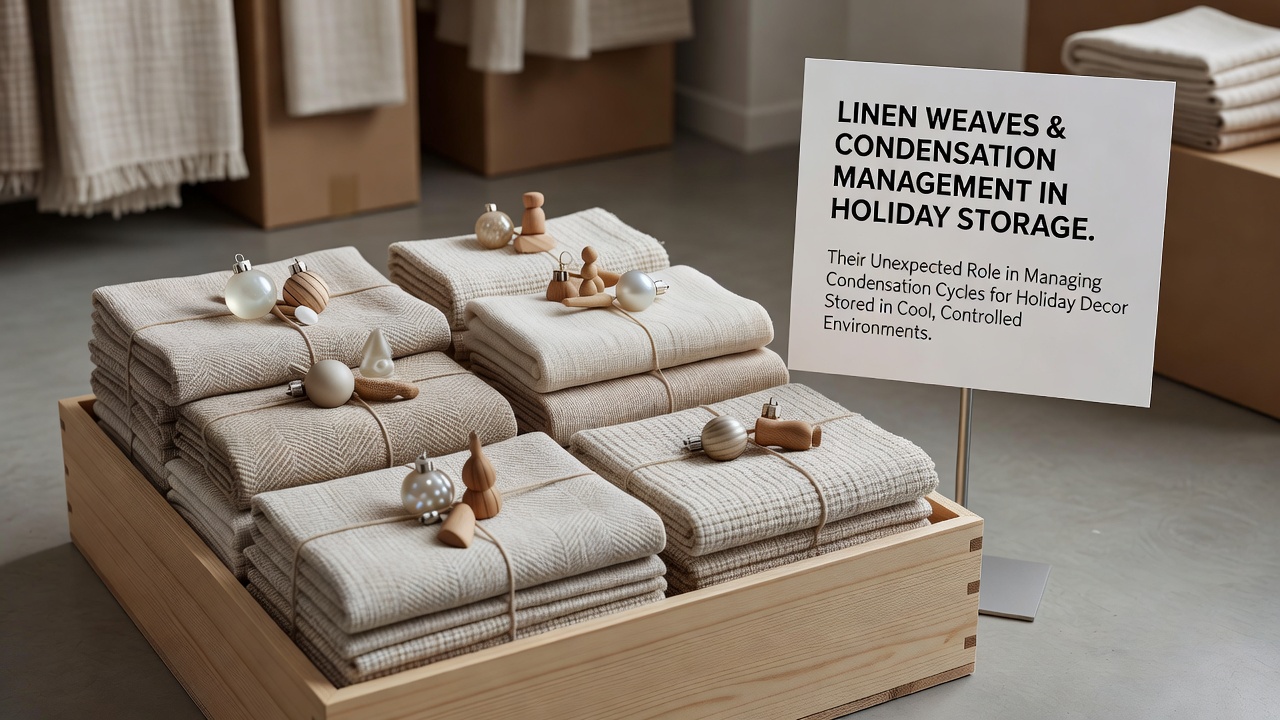
One documented approach involves layering linen sheets directly over stacked boxes so that any vapor rising from below gets absorbed before reaching the decor itself. This method aligns with recommendations from Canadian housing research groups that emphasize passive moisture management in roof spaces rather than relying solely on active ventilation systems. Because linen resists mildew growth even after repeated moisture exposure, it maintains effectiveness across multiple storage seasons without degradation that synthetic alternatives sometimes exhibit.
Performance Data Across Climate Zones
Measurements collected in both temperate and continental climates reveal consistent patterns where linen integration shortens the time surfaces stay above critical humidity thresholds. Australian textile studies, for instance, recorded evaporation timelines that were notably shorter when flax weaves were present versus impermeable covers. These findings translate directly to holiday decor because many items contain mixed materials sensitive to prolonged dampness, including adhesive joints in figurines and painted finishes on ornaments. The unexpected aspect lies in how the same fabric traditionally used for apparel and household linens performs this regulatory function without chemical treatments or added coatings.
Installation remains straightforward because linen sheets can be cut to fit compartment dimensions and secured with simple ties or weights, allowing air circulation around the edges. Maintenance involves occasional airing rather than replacement, since teh fibers regain full performance after drying. Trade organizations tracking natural fiber applications continue to catalog these characteristics as builders and homeowners seek alternatives that integrate with existing attic structures instead of requiring extensive retrofits.
Conclusion
Research continues to map the precise mechanisms through which linen weaves moderate condensation cycles in ceiling compartments, particularly when applied to the seasonal storage of holiday decor. Available data point to measurable reductions in humidity dwell time and surface moisture accumulation when these fabrics are incorporated into storage routines. As more households adopt these methods ahead of October 2026 storage periods, the documented interactions between flax fibers and attic microclimates provide a foundation for further refinement of passive preservation strategies.