Riley Baumann · 5 November 2026
Linen Applications in Managing Vibration Transmission for Roof Void Storage of Antique Clocks and Mechanical Collectibles
Roof voids present unique challenges for storing delicate collectibles because structural movements from wind loads, thermal expansion, and foot traffic transmit vibrations through framing members directly into stored items. Linen, derived from flax fibers, offers measurable characteristics that alter how these vibrations propagate when deployed as liners, wraps, or interlayers in such spaces. Data from materials testing indicates that linen's natural tensile strength and slight elasticity allow it to absorb and dissipate energy across a range of frequencies commonly encountered in residential roof structures.
Characteristics of Vibrations in Elevated Storage Zones
Roof voids experience periodic vibrations from multiple sources including HVAC equipment, seasonal weather events, and occasional maintenance access. These oscillations travel along joists and rafters before reaching objects placed on shelves or floors. Antique clocks and mechanical devices contain precision components such as gears, pendulums, and balance wheels that can suffer misalignment or accelerated wear when exposed to sustained low-frequency movement. Research conducted at conservation laboratories shows that unprotected items in these environments accumulate measurable displacement over months of exposure, with amplitudes often falling between 0.1 and 2 millimeters depending on building age and location.
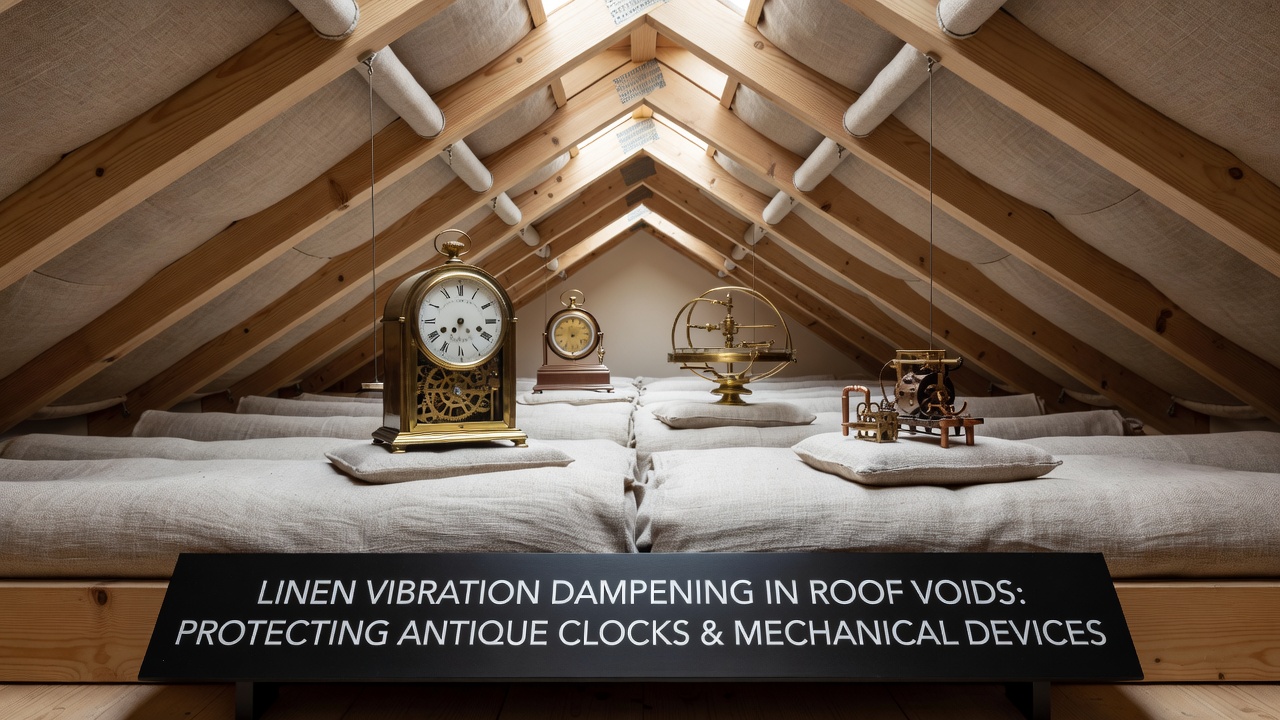
Placement of woven linen sheets between storage surfaces and collectibles creates an interface that interrupts direct mechanical coupling. The fabric's interlaced structure distributes force across multiple fiber directions, reducing peak transmission to underlying objects. Observers note that this effect becomes more pronounced when linen layers are installed with slight tension rather than loose draping, allowing the material to function as a distributed damping medium instead of a simple cushion.
Material Properties That Support Vibration Control
Flax fibers used in linen production possess a high modulus of elasticity combined with natural crimp that enables energy dissipation through internal friction. Laboratory measurements reveal that linen fabrics can attenuate vibrations in the 5 to 50 Hertz range, which overlaps with many building-induced frequencies. Moisture regain properties of linen also contribute indirectly because the fiber maintains dimensional stability across typical attic humidity fluctuations, preventing the development of slack that would otherwise reduce damping effectiveness.
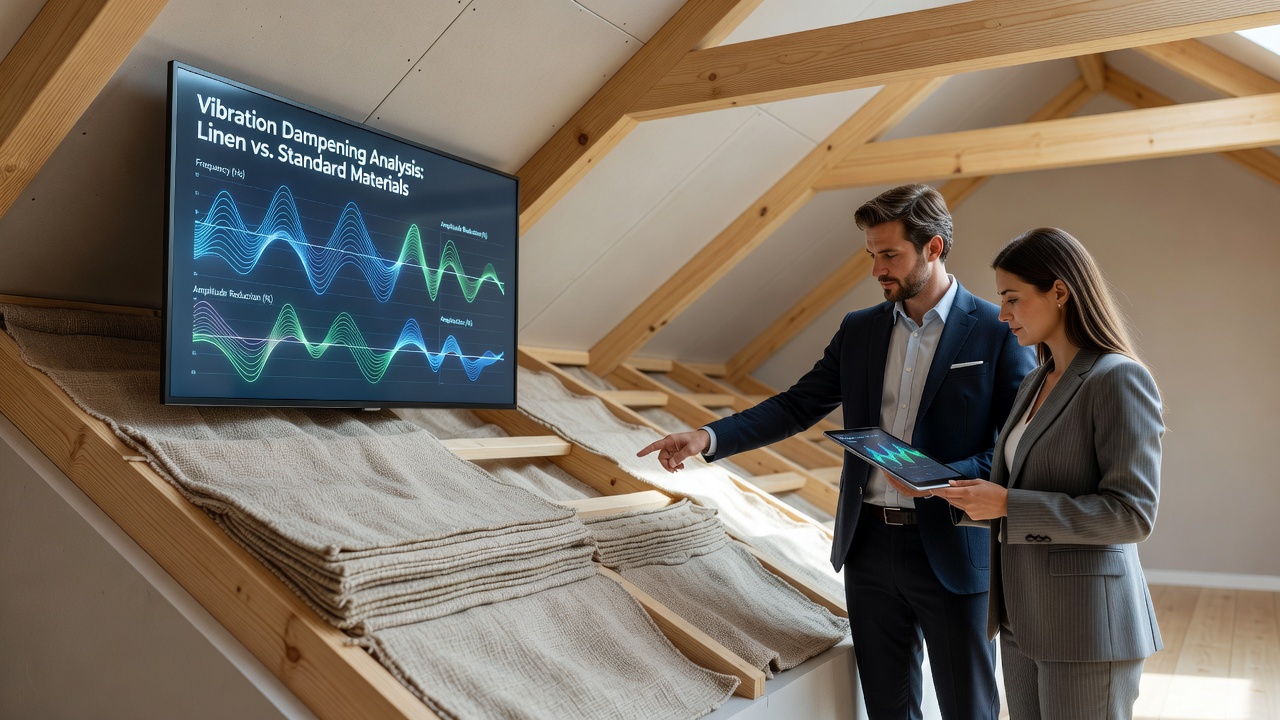
Comparisons with synthetic alternatives demonstrate that linen maintains performance without introducing static charge or off-gassing that could affect metal surfaces or lubricants inside clocks. When multiple linen layers are stacked with air gaps between them, the system creates additional shear planes that further dissipate vibrational energy through sliding friction at fiber contact points. This layered approach has been documented in storage protocols developed by institutions managing large mechanical collections.
Installation Approaches Observed in Practice
Professionals preparing roof voids for long-term storage often secure linen panels to the underside of rafters or across shelf surfaces using non-corrosive fasteners. The fabric extends several centimeters beyond the protected items to ensure continuous coverage against flanking paths. In November 2026, the Canadian Conservation Institute published updated guidelines that reference textile barriers for vibration-sensitive artifacts, noting their compatibility with breathable storage environments. Integration with existing insulation requires careful sequencing so that linen remains accessible for periodic inspection without disturbing thermal layers.
One documented project involved a heritage property in regional Victoria, Australia, where conservators applied linen wraps around individual clock cases before placing them on elevated platforms. Follow-up monitoring over eighteen months recorded reduced incidence of pendulum drift compared with unwrapped controls housed in the same void. Similar techniques appear in European museum annexes where space constraints force reliance on attic-level storage.
Monitoring and Maintenance Considerations
Regular assessment of linen condition ensures continued damping performance because accumulated dust or fiber degradation can alter acoustic and mechanical properties. Simple visual inspections combined with periodic tension checks allow early detection of sagging or tears. Data loggers placed alongside collectibles provide quantitative feedback on vibration levels before and after linen installation, confirming attenuation rates that align with laboratory predictions.
Replacement cycles typically extend beyond five years when linen is kept dry and shielded from direct sunlight through roof penetrations. This longevity supports cost-effective use in permanent installations where frequent access remains limited.
Conclusion
Linen deployment in roof voids demonstrates consistent capacity to modify vibration transmission patterns affecting antique clocks and mechanical devices. The fiber's inherent mechanical properties, combined with straightforward installation methods, provide a practical option for institutions and collectors managing storage constraints. Continued documentation from conservation bodies across multiple regions supplies evidence that supports wider consideration of this approach where vibration exposure poses measurable risks to precision artifacts.