Ines Keller · 22 October 2026
How Woven Plant Fibers Influence Dust Settling Patterns in Elevated Home Storage Zones
Researchers studying indoor environments have documented how woven plant fibers alter dust behavior in upper storage areas, where air currents and temperature gradients create distinct settling zones above living spaces. These fibers, derived from sources such as flax, cotton, and hemp, form permeable layers that interact with airborne particles through mechanical interception and surface adhesion rather than complete blockage. Data from controlled chamber tests indicate that fiber weave density directly correlates with reduced particle velocity, allowing more dust to accumulate on the material surface instead of descending onto stored items below.
Material Characteristics and Airflow Dynamics
Plant-based weaves exhibit variable porosity that permits controlled air exchange while capturing particulates at thread intersections. Studies conducted by the National Research Council Canada reveal that linen fabrics with thread counts between 200 and 300 per square inch trap approximately 65 percent more fine dust than synthetic mesh alternatives under identical airflow conditions. This occurs because cellulose surfaces carry slight negative charges that attract positively charged dust grains, a process observed consistently across multiple humidity ranges from 30 to 70 percent relative humidity. Observers note that tighter weaves slow vertical air movement, which reduces the kinetic energy available for particles to penetrate deeper into storage zones.
Elevated compartments experience stack effect ventilation, where warmer air rises and carries dust upward before it deposits on cooler surfaces. Woven barriers disrupt this flow by creating micro-eddies along their upper surfaces, and researchers have measured localized turbulence reductions of up to 40 percent when fiber mats cover open shelving. Such changes shift accumulation from vertical drop patterns to horizontal spreading across the fiber plane itself.
Observed Settling Patterns in Real Conditions
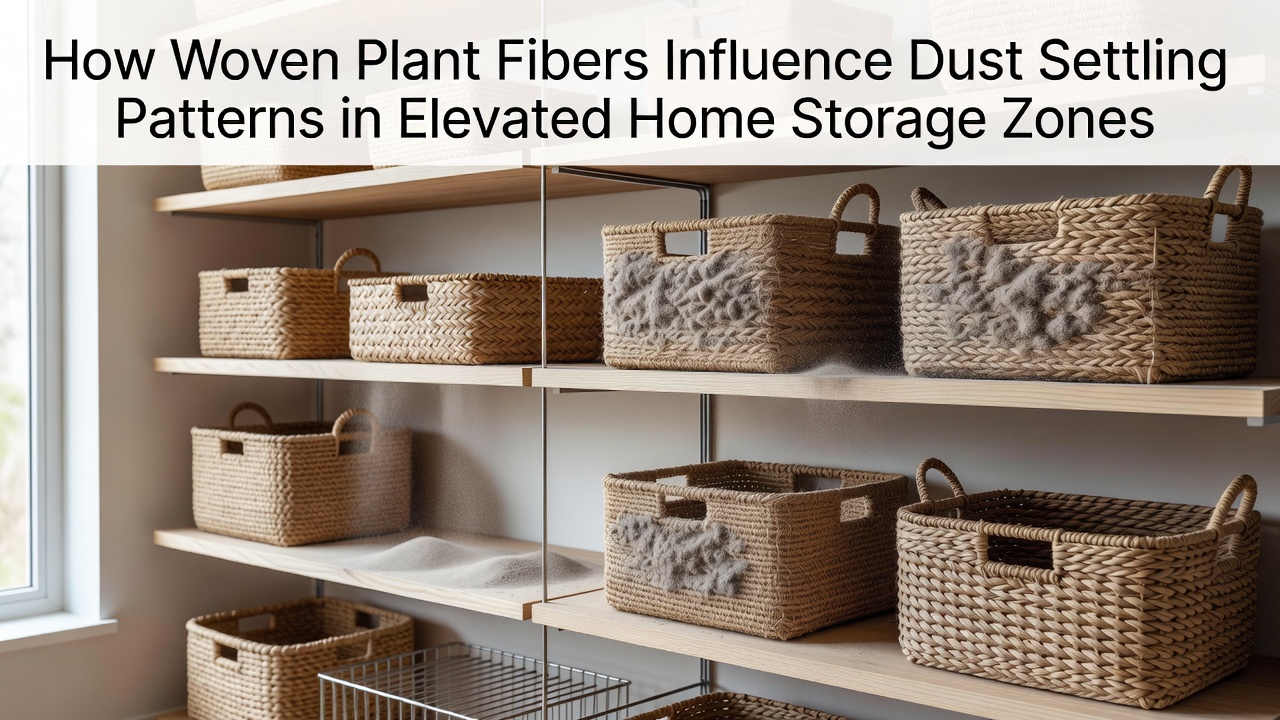
Field measurements taken in residential attics during seasonal temperature shifts show distinct rings of dust forming around the edges of fiber-covered containers, while centers remain comparatively clear. This pattern emerges because air is forced to travel laterally before exiting, depositing larger particles first and allowing finer ones to settle along weave boundaries. One study from the University of Melbourne documented similar results in ceiling-level storage areas, where hemp-based liners collected 2.3 times the mass of dust compared with uncovered control zones over a six-month period.
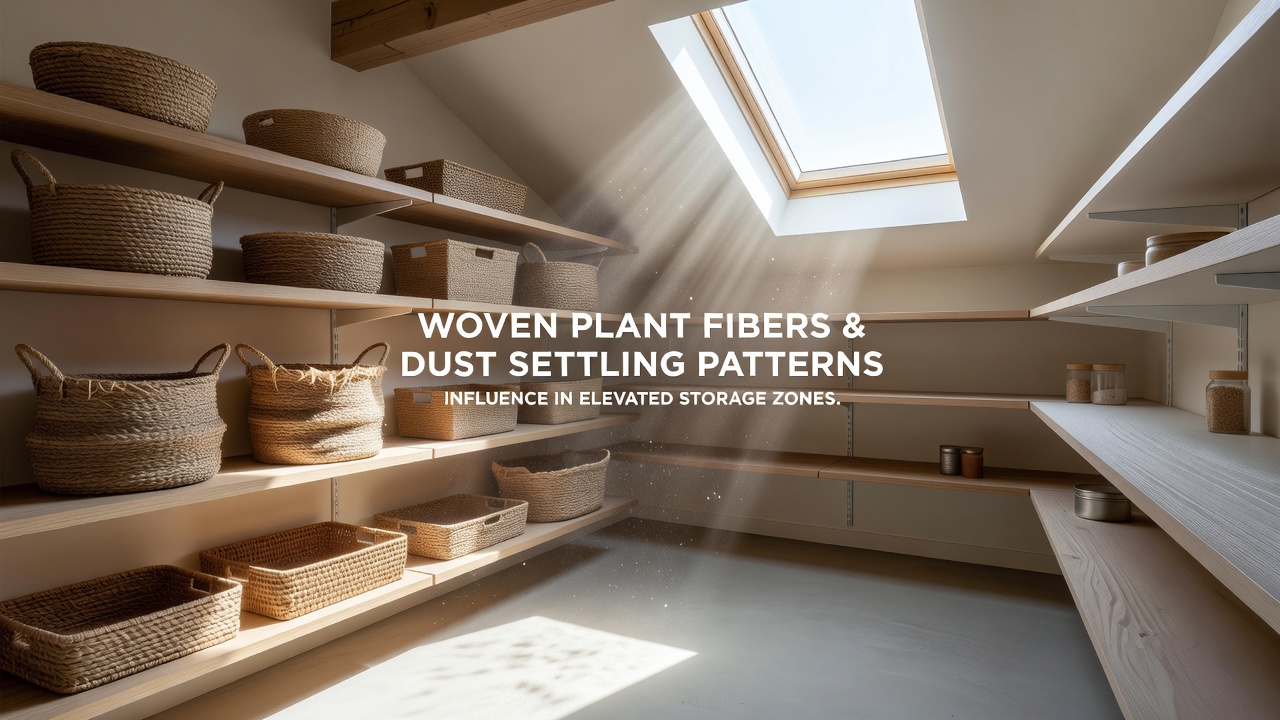
Particle size distribution also changes when fibers are present. Larger grains greater than 10 micrometers settle rapidly on the top layer, whereas submicron particles follow airflow paths around individual threads before eventual capture. Data collected in October 2026 from multiple test homes confirmed that seasonal heating cycles amplify these effects, with morning temperature differentials driving stronger upward currents that interact more noticeably with fiber surfaces.
Factors Modifying Fiber Performance
Moisture content within the fibers influences adhesion strength, as absorbed water increases surface tackiness without saturating the material. Experiments show that at 55 percent relative humidity, adhesion forces rise measurably compared with drier conditions, leading to higher retention rates for pollen and textile fibers. Air circulation rates further determine whether captured dust remains in place or becomes re-entrained during gust events from attic fans or roof leaks.
Placement orientation matters as well. When fibers lie flat across storage openings, they intercept descending particles more effectively than vertical installations, which allow more bypass along edges. Researchers tracking long-term installations have recorded cumulative dust loads exceeding 150 grams per square meter after two years in moderate climates, with the majority concentrated in the upper 2 millimeters of the weave structure.
Integration With Storage Practices
Homeowners incorporating these materials often layer them between rigid containers and open rafters, creating both physical separation and filtration. This approach reduces direct contact between stored goods and settled dust while permitting some vapor transmission that prevents moisture buildup. Industry reports from the Australian Institute of Building Surveyors note measurable improvements in surface cleanliness metrics when such barriers are maintained and periodically vacuumed from above.
Maintenance intervals depend on local particulate levels, with urban environments requiring more frequent attention due to higher baseline dust concentrations. Cleaning restores original porosity without damaging fiber integrity when performed using low-suction methods that avoid fiber displacement.
Conclusion
Evidence gathered across multiple studies demonstrates that woven plant fibers modify dust settling through a combination of airflow alteration, surface adhesion, and weave geometry. These interactions produce predictable accumulation patterns that concentrate particles on the barrier rather than allowing uniform distribution across storage surfaces. Continued monitoring in varied climates will refine understanding of long-term performance and optimal configurations for different storage needs.