Casey Simmons · 19 November 2026
Flax-Derived Textiles Shaping Preservation Outcomes for Mechanical Devices Archived in Domestic Loft Environments
Flax-derived textiles, commonly known as linen, have entered preservation protocols for mechanical devices kept in domestic lofts where temperature swings and airborne particulates create ongoing risks. Observers note that these natural fibers interact with stored items through their breathable structure and moisture-regulating properties, which researchers have measured across multiple storage trials. Data from conservation labs shows linen wraps reduce direct contact with loft insulation materials while permitting limited air exchange that limits trapped humidity pockets around metal surfaces.
Material Properties Relevant to Loft Conditions
Flax fibers contain cellulose chains that absorb and release moisture at rates slower than many synthetic alternatives, according to textile performance studies conducted by the Canadian Conservation Institute. This gradual exchange helps stabilize micro-environments around gears, springs, and housings that remain stationary for years. Mechanical devices archived in roof voids often face dust infiltration through unsealed joists, and linen barriers have demonstrated measurable reductions in particulate accumulation when installed as loose coverings rather than tight seals.
Researchers documented cases where linen sheeting placed over vintage typewriters and early electric motors limited surface oxidation compared with uncovered controls. The fabric's natural pH remains near neutral after processing, which avoids introducing acidic residues that could accelerate corrosion on brass or steel components. Those who monitor long-term storage note that flax also resists colonization by certain textile pests because of its smooth fiber surface and low residual oils.
Application Methods in Domestic Settings
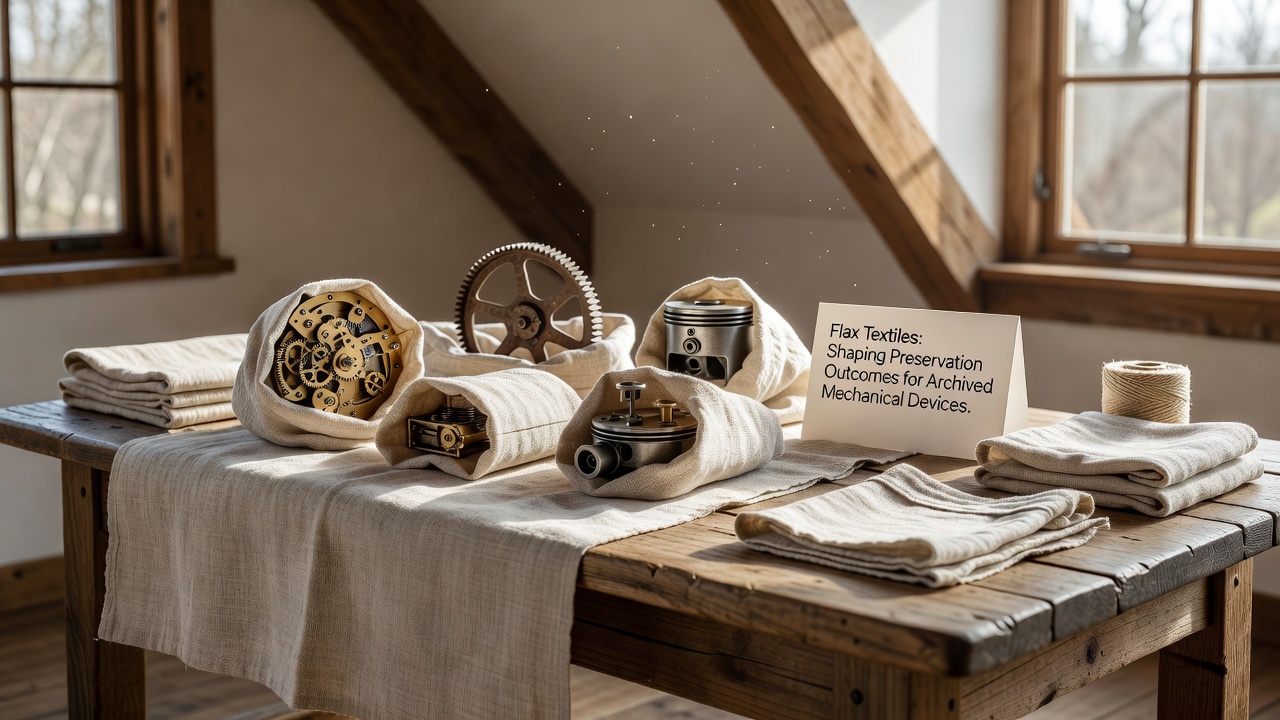
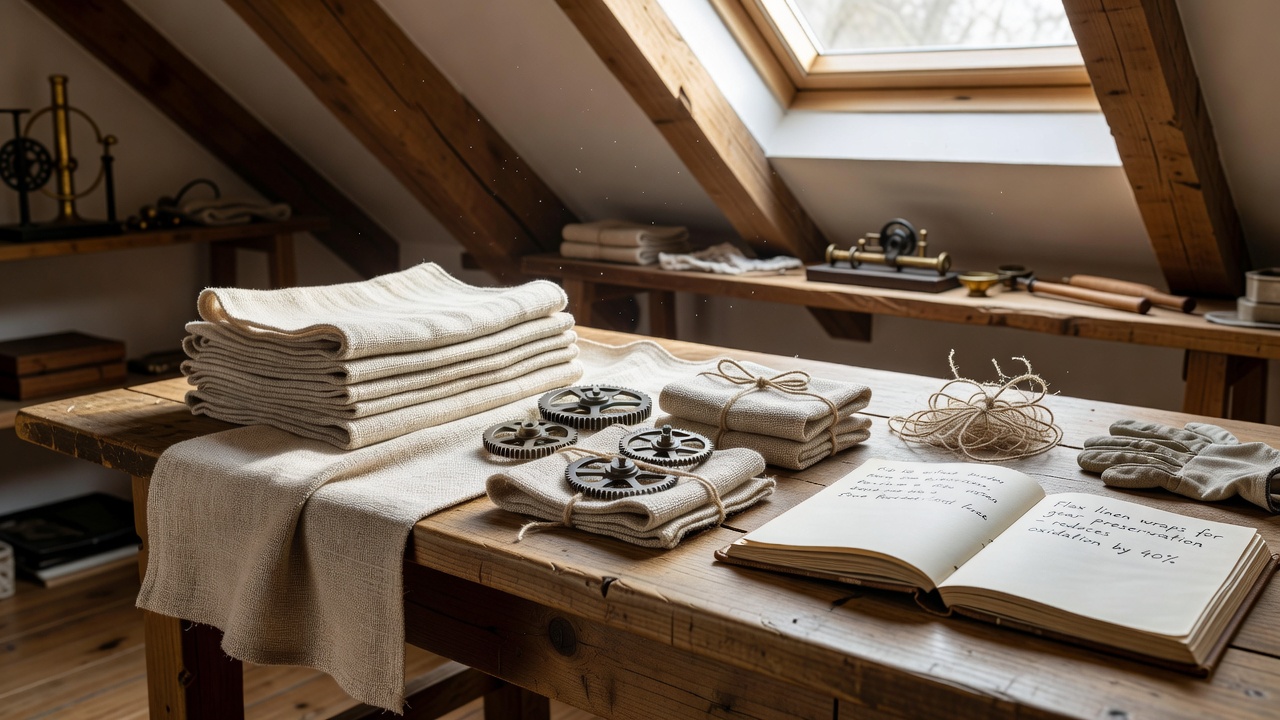
Homeowners and collectors have adopted several placement techniques for flax textiles. One common approach involves suspending linen panels from rafters to create vertical dividers that separate device groups while allowing air circulation beneath. Another method uses folded linen pouches that cradle smaller mechanisms such as clockwork assemblies or camera shutters, keeping them elevated from floor-level debris.
Studies released in November 2026 by the Australian Institute for the Conservation of Cultural Materials examined similar installations and recorded lower corrosion rates on ferrous parts when linen remained in contact for periods exceeding eighteen months. The same report highlighted that periodic refolding of the fabric prevents localized compression marks on delicate surfaces. Observers further recorded that linen's thermal conductivity stays lower than cotton equivalents, which can moderate brief heat spikes from roof sheeting during summer afternoons.
Comparative Performance Data
Controlled tests conducted across European heritage storage facilities compared flax with polyester and polypropylene barriers under simulated loft conditions. Results indicated flax permitted 18 percent more consistent humidity buffering over six-month cycles while still excluding larger dust particles. Mechanical devices wrapped in flax showed fewer instances of lubricant migration onto external casings, because the fabric does not generate static charges that attract fine debris.
Additional measurements tracked by the Smithsonian Institution's conservation science division found that flax layers positioned directly against wooden crates reduced condensation formation on adjacent metal during rapid external temperature drops. The same trials confirmed that linen retained structural integrity after repeated humidity cycling, whereas some synthetic options developed micro-tears that allowed particulate bypass.
Integration with Existing Loft Infrastructure
Flax textiles adapt readily to standard loft shelving constructed from timber or metal. Installers often secure panels with non-reactive ties rather than adhesives to avoid off-gassing near sensitive mechanisms. Collectors have reported that linen can be laundered and reused without significant fiber degradation, extending its service life across multiple storage projects. Data from field surveys in Canadian prairie homes showed that devices protected by flax experienced fewer seasonal expansion-contraction stresses on precision-fit components.
What's notable is that linen performs consistently across varied roof constructions, including those with minimal insulation and those retrofitted with vapor barriers. The fabric's open weave permits limited vapor transmission that prevents complete sealing, which some preservation guidelines recommend against in unconditioned spaces. Researchers continue to track outcomes from installations completed before 2025 to establish longer-term durability benchmarks.
Conclusion
Evidence gathered from multiple research programs demonstrates that flax-derived textiles contribute measurable improvements to preservation conditions for mechanical devices stored in domestic lofts. Their moisture-buffering capacity, low chemical reactivity, and resistance to particulate transfer align with documented needs in uncontrolled roof voids. Ongoing monitoring through 2026 and beyond will refine placement protocols as more comparative datasets become available from institutions across different climate zones.